


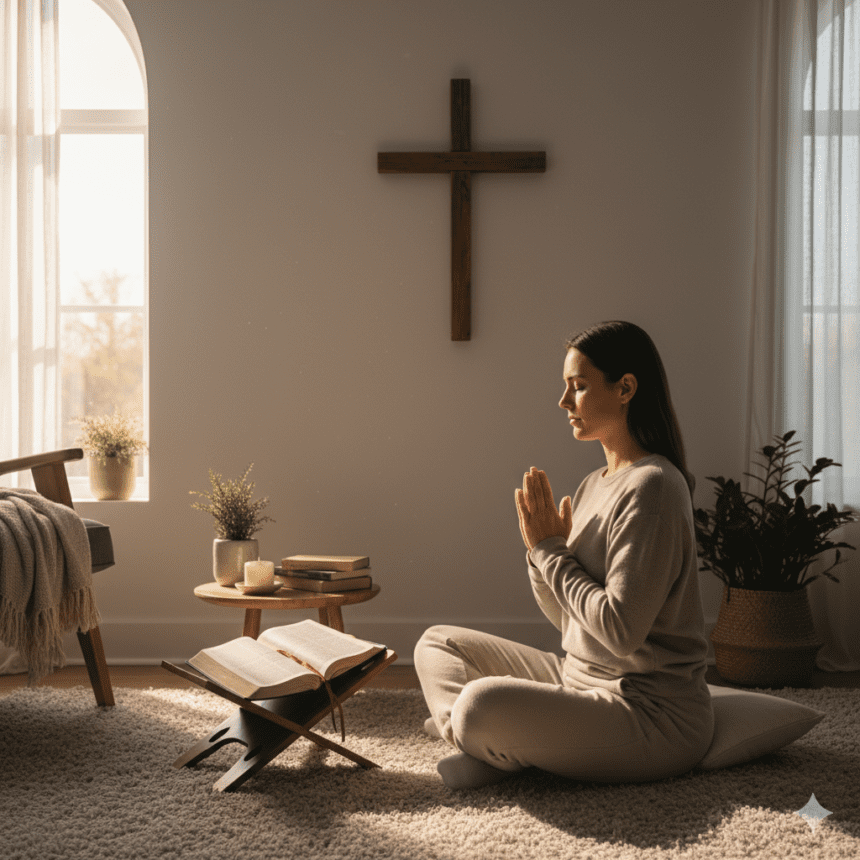
Hey there! If you’ve ever wondered whether meditation fits with your spiritual or religious beliefs, you’re definitely not alone. It’s one of the most common questions people ask when they’re starting their mindfulness journey—and it’s an important one.
Maybe you’ve heard that meditation is “just an Eastern practice” or something that conflicts with Western religious traditions. Or perhaps you’re curious about how to deepen your spiritual life while also benefiting from the mental health advantages meditation offers.
Today, we’re diving into this fascinating topic, and I think what you discover might actually surprise you.
The Question: Can People of Faith Meditate?
Here’s the thing: meditation has been practiced across virtually every spiritual tradition for thousands of years. From Buddhist monks to Christian monastics, from Hindu yogis to Islamic Sufis, contemplative practices have been a cornerstone of spiritual development throughout human history.
But in recent decades, especially in the West, meditation has sometimes been presented as either:
- A purely secular, scientific practice (think mindfulness apps)
- An exclusively Eastern or Buddhist tradition
- Something that conflicts with Judeo-Christian faith
The reality? It’s far more nuanced and interesting than that.
What Does “Meditation” Actually Mean?
Part of the confusion comes from the fact that “meditation” means different things in different contexts. Let’s break it down:
Eastern/Buddhist Meditation
Often focuses on:
- Emptying the mind
- Achieving a state of “no thought”
- Detaching from the self
- Reaching enlightenment through one’s own effort
Secular Mindfulness
Commonly involves:
- Present-moment awareness
- Non-judgmental observation of thoughts
- Stress reduction techniques
- Mental health benefits (anxiety, depression, focus)
Contemplative/Spiritual Meditation
Typically includes:
- Dwelling on sacred texts or spiritual truths
- Deepening connection with the Divine
- Reflecting on meaning and purpose
- Communion with a higher power
The key insight? These are fundamentally different practices with different goals, even though they share the word “meditation.”
Ancient Wisdom: Meditation in Religious Traditions
If you’re coming from a faith background and wondering if meditation is “allowed” or compatible with your beliefs, here’s something fascinating: contemplative practices have been part of major world religions for millennia.
Christian Contemplative Tradition
Many people are surprised to learn that Christian meditation has a 2,000-year history. Early Christian monks known as the Desert Fathers (3rd-4th centuries) developed deep practices of contemplative prayer and Scripture meditation.
Throughout church history, practices like:
- Lectio Divina (sacred reading of Scripture)
- The Jesus Prayer (repeated contemplative prayer)
- Contemplative silence before God
- Scriptural meditation (dwelling on biblical passages)
…were central to Christian spirituality. Figures like St. Benedict, Teresa of Avila, Julian of Norwich, and countless others wrote extensively about these practices.
The Hebrew Scriptures themselves contain direct commands to meditate:
- “Meditate on it day and night” (Joshua 1:8)
- “Blessed is the one who meditates on his law day and night” (Psalm 1:2)
- “I meditate on your precepts” (Psalm 119:15)
The Hebrew word used—hagah—means to mutter, contemplate, think deeply, and meditate.
Other Faith Traditions
- Judaism has rich contemplative traditions, including Kabbalistic meditation practices
- Islam includes practices like dhikr (remembrance of God) and Sufi contemplation
- Hinduism and Buddhism obviously have extensive meditation traditions spanning thousands of years
The point? Meditation isn’t foreign to faith—it’s been woven into spiritual practice across traditions for as long as humans have sought deeper connection with the sacred.
The Real Difference: What Are You Meditating On?
Here’s what matters most: the object of your meditation.
Are you trying to empty your mind completely? Or fill it with truth and meaning? Are you detaching from reality? Or becoming more present to what’s real and important? Are you seeking some altered state? Or simply resting in awareness and peace?
This is where the distinction becomes crucial:
Secular mindfulness can be beneficial for mental health—reducing stress, improving focus, managing anxiety. There’s solid research backing these benefits. But it’s spiritually neutral at best.
Spiritual meditation, on the other hand, isn’t just about calming your nervous system (though it does that too). It’s about:
- Connecting with something greater than yourself
- Dwelling on truth, beauty, and goodness
- Listening for guidance or wisdom
- Aligning your whole self—mind, heart, and spirit—with your deepest values
If prayer is talking to God (or the Divine, depending on your tradition), meditation is listening—creating space to hear, to receive, to become more aware of spiritual reality.
Watch: Is Christian Meditation Biblical?
If you’re specifically interested in the Christian perspective on meditation, I created an in-depth video exploring this question. I look at what Scripture says, how Christian meditation differs from other forms, and the 2,000-year history of contemplative prayer in the church.
Watch here:
This video addresses the most common concerns Christians have about meditation and provides a clear, biblically-grounded answer. Even if you’re not coming from a Christian background, you might find the historical perspective fascinating.
How to Practice Faith-Based Meditation
Whether you’re Christian, Jewish, Muslim, or simply someone who wants to integrate spirituality into your meditation practice, here are three approaches:
1. Sacred Text Meditation
Choose a meaningful passage from your spiritual tradition—a verse, a prayer, a teaching. Find a quiet space, sit comfortably, and slowly read or recite it.
Don’t analyze it intellectually. Let the words sink in. Repeat them slowly. Notice what resonates, what questions arise, what insights emerge.
Example: If you’re Christian, you might meditate on “Be still and know that I am God” (Psalm 46:10). Let each word land: Be still… and know… that I am God.
2. Breath Prayer
This ancient practice synchronizes a short prayer or meaningful phrase with your breathing.
How to do it:
- Sit in a comfortable position
- Choose a short phrase that matters to you (e.g., “Lord, have mercy,” “Peace be with me,” “I am loved,” “All is well”)
- As you inhale, silently say the first part
- As you exhale, silently say the second part
- Let the rhythm of your breath carry the prayer deeper
This isn’t about forcing anything—it’s about creating a gentle rhythm that brings you back to center whenever your mind wanders.
3. Contemplative Silence
Set aside 10-15 minutes. Sit quietly. You’re not trying to think through problems or analyze anything. You’re simply being present—to yourself, to the moment, to God or the sacred (however you understand it).
When your mind wanders (and it will), gently bring it back. “I’m here. I’m listening.”
This is probably the hardest practice for beginners because we’re so used to constant mental activity. But it’s also one of the most transformative.
What Science Says About Meditation and Spirituality
Interestingly, research shows that integrating spirituality with meditation can actually enhance the benefits.
Studies have found that:
- Spiritual meditation reduces anxiety more effectively than secular meditation in some populations
- People who practice faith-based meditation report greater life satisfaction and sense of purpose
- Contemplative prayer activates similar brain regions as mindfulness meditation (the prefrontal cortex, associated with attention and self-regulation)
- Religious individuals who meditate show lower cortisol levels and better stress resilience
This makes sense: if your meditation practice is connected to your deepest values and sense of meaning, it’s not just a stress-reduction technique—it’s a way of life.
Addressing Common Concerns
“Isn’t meditation about emptying your mind? Won’t that open me up to negative influences?”
This is a common worry, especially in Christian circles. The key is understanding the difference:
- Emptying your mind (the goal in some Eastern practices) vs. Filling your mind with truth (the goal in spiritual meditation)
- Passive receptivity to anything vs. Active focus on what’s good, true, and beautiful
In faith-based meditation, you’re not creating a vacuum—you’re intentionally focusing on sacred texts, prayers, or divine presence. You’re exercising discernment, not abandoning it.
“I can’t sit still for that long!”
Neither could most people when they started! Meditation is a skill, not a talent. You’re training your attention, and like any training, it takes practice.
Start with just 3-5 minutes. Use a guided meditation (like the ones on our YouTube channel). Be patient with yourself.
“Isn’t meditation selfish? Shouldn’t I be serving others instead?”
This is like saying, “Isn’t sleeping selfish? Shouldn’t I be working 24/7?”
Meditation isn’t about navel-gazing or escaping responsibility. It’s about becoming more grounded, more present, more compassionate—so you can show up better for others.
Even Jesus regularly withdrew to quiet places to pray and be alone with God. That wasn’t selfish—it was how he sustained his ministry.
The Bottom Line
Can you meditate and maintain your faith? Absolutely.
In fact, for thousands of years, people of faith have found meditation to be one of the most powerful ways to deepen their spiritual lives, connect with the Divine, and find peace in a chaotic world.
The key is to be intentional about:
- What you’re meditating on (sacred truth vs. just emptying your mind)
- Why you’re meditating (spiritual connection vs. just stress relief)
- How you’re approaching it (with discernment and alignment with your values)
Your Next Steps
If you’re curious about faith-based meditation:
- Start with Scripture or sacred texts—find a short passage that speaks to you and spend 5 minutes dwelling on it
- Try breath prayer—choose a meaningful phrase and let it anchor your breathing
- Explore guided meditations that align with your beliefs—we’re creating more of these on our YouTube channel
And if you want to dive deeper into the Christian perspective specifically, watch the video above. It addresses the theological questions, the historical evidence, and practical ways to get started.
Join the Journey
Meditation doesn’t have to conflict with your faith—it can be one of the most meaningful expressions of it. Whether you’re Christian, Jewish, Muslim, Hindu, Buddhist, or simply someone seeking deeper spiritual connection, contemplative practice has been a gift to humanity for millennia.
We’d love to hear from you: Have you struggled with questions about meditation and faith? What’s been your experience? Drop a comment below or reach out at hello@unusualmonk.com.
And if you want more content on Christian meditation specifically, subscribe to our YouTube channel where we post new guided meditations every Monday, Wednesday, and Friday.
Until next time, may you find peace in the stillness.
Related Articles You Might Enjoy:
- Meditation 101: How to Meditate Correctly
- How to Meditate Mindfulness for Beginners: A Comprehensive Guide
- The Greatest Journey: Exploring Your Inner World Through Meditation
- Finding Stillness Amidst the Storm: Embracing Peace Through Meditation
Want weekly mindfulness insights delivered to your inbox? Subscribe to our newsletter and join the UnusualMonk community.